
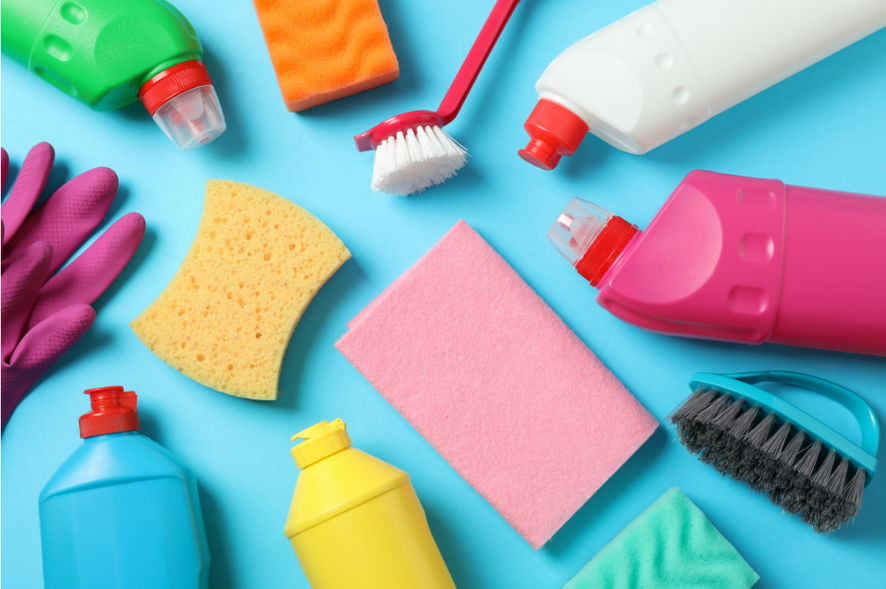
Cleaning Supplies List: 25+ Essential Tools for a Perfectly Pristine Home
08/11/2011
/

Setting up your home/office for cleaning requires more than just a generic spray and a cloth. To achieve professional results, you need a curated toolkit that balances efficiency with surface protection. Below is our expert-guided list of equipment every Singaporean household should maintain.
Essential Cleaning Supplies List
Every home is unique and
different

Benefits of a Structured Cleaning Supplies List
Eliminates Decision Fatigue: Having everything on this list ready allows your cleaner to skip the “search phase” and move straight into the 15-minute prep and active cleaning zones.
Efficiency and Speed: Using the right tools—like Microfiber and specialized Scouring Pads—ensures stains are removed faster without damaging surfaces.
Rotational Success: Items like the Extendable Hand Duster ensure that “Ad Hoc” chores, such as cleaning ceiling fans or high ledges, are never neglected.
Preparing your home for a professional session ensures that your cleaner can maximize every minute of the session. Below is a breakdown of the tools, detergents, and ironing equipment required for a pristine finish.


Floor Maintenance: A reliable Vacuum Cleaner and Broom & Dustpan are essential for dry soil removal. For balcony or outdoor areas, a Hard Bristle Broom is recommended to tackle tougher debris.
Surface Detailing: Microfiber Cloths are the gold standard for dusting without scratching surfaces. For specialized tasks, use an Extendable Hand Duster for high ledges and an Extendable Squeegee for crystal-clear windows.
Pro Tip: Remember to always follow the manufacturer’s instructions when using cleaning products, and test a small, inconspicuous area before using a new product on surfaces. Regularly check your cleaning supplies and replace items as needed to ensure your cleaning kit is always ready for action.


Wet Cleaning Systems: We recommend a Mop Bucket & Mop or a Wiper Mop with Sheets for precision floor care.
Having both Big & Small Pails allows for better water management and minimizes cross-contamination between rooms.
Microfiber Cloths are essential for scratch-free dusting. For hard-to-reach areas, include an Extendable Hand Duster and an Extendable Squeegee for windows.
Pro Tip: Let the Chemicals Do the Work
For heavy grease in the kitchen or stubborn limescale in the bathroom, apply your Kitchen Cleaner or Bathroom Cleaner and let it “dwell” for 5–10 minutes.
This breaks down the molecular bonds of grime, meaning you can simply wipe it away with a Microfiber Cloth or Scouring Pad rather than scrubbing aggressively and risking surface damage.


Specialized Scrubbers: Maintain a stock of Sponges & Brushes, Scouring Pads, and a Handbrush for deep-cleaning grout or stubborn stains.
Daily Surfaces: A Multi Purpose Cleaner handles most tables and countertops, while specialized Glass Cleaner ensures streak-free mirrors.
Pro Tip: Every 3 months, audit your Cleaning Supplies List. Replace Sponges & Brushes to prevent bacterial growth and ensure your Vacuum Cleaner filter is washed or replaced to maintain peak suction and air filtration.


Premium Material Care: For high-end finishes, ensure you have Wood Cleaner/Polish or Stone Cleaner/Polish to maintain the natural luster of your furniture and flooring.
The Setup: A sturdy Ironing Board and a functional Electric Iron are the primary requirements.

Professional Finishes: Use Ironing Starch for crisp collars and Fabric Freshener to give your garments a clean, laundry-fresh scent.

Specialized Tools: A Garment Steamer is ideal for delicate silks, while a Sleeve Board helps achieve professional-grade creases on dress shirts.
It’s nearly impossible to make a universal cleaning plan and supply list that fits every home. Our cleaning plan and supply list serves only as a reference. Supplies list is broken down into 3 main categories. Use these categories as a starting point for creating your own basic cleaning supply list.
Tools & Equipment
-
Vacuum Cleaner
-
Broom & Dustpan
-
Hard Bristle Broom
-
Microfiber Cloths
-
Sponges & Brushes
-
Scouring Pads
-
Bucket & Mop
-
Big & Small Pails
-
Mop Bucket & Mop
-
Handbrush
-
Toilet Bowl Brush
-
Extendable Hand Duster
-
Wiper Mop & Sheets
-
Extendable Squeegee
Detergent
-
Dishwashing Detergent
-
Floor Detergent
-
Glass Cleaner
-
Bathroom Cleaner
-
Toilet Bowl Cleaner
-
Disinfectant
-
Multi Purpose Cleaner
-
Soft Scrubbing Cleanser
-
Air Freshener
-
Kitchen Cleaner
-
Mildew & Mold Cleaner
-
Wood Cleaner/Polish
-
Stone Cleaner/Polish
-
Sink Declogger
Ironing
-
Electric Iron
-
Ironing Board
-
Garment Steamer
-
Sleeve Board
-
Fabric Refreshener
-
Hangers
-
Ironing Starch

Expert Insights: Your Cleaning Supplies FAQ
● Why should I provide two pails instead of just one?
Using a “Two-Pail System”—one for your detergent solution and one for clean rinse water—is a professional standard that prevents cross-contamination. This ensures that once dirt is lifted from the floor, it isn’t spread back onto other surfaces, maintaining a truly hygienic environment.
● What is the benefit of using microfiber cloths over standard cotton rags?
Microfiber Cloths are engineered to “grab” and lift dust and bacteria rather than just pushing them around. They are non-abrasive, making them safe for delicate furniture and glass, and they dry significantly faster, which prevents the growth of mold in Singapore’s humid climate.
● Do I really need specialized stone and wood polishes?
Yes, using a generic Multi-Purpose Cleaner on natural materials like marble or solid wood can strip away protective sealants or cause dulling over time. Providing dedicated Stone Cleaner/Polish and Wood Cleaner/Polish ensures the longevity and luster of your home’s premium surfaces.
● Why is a vacuum cleaner listed as a priority over a broom?
While a Broom & Dustpan are great for large debris, only a Vacuum Cleaner can effectively remove fine particulates and allergens from floor crevices and rugs. Using a vacuum as the primary “Dry Cleaning” step significantly improves indoor air quality before the mopping phase begins.
● What is the difference between a Garment Steamer and an Electric Iron?
An electric iron uses direct heat for crisp creases in heavy cottons. A garment steamer uses hot steam to relax fibers, making it safer for delicate fabrics like silk or curtains that might scorch under direct heat.
Pristine Home Essentials
Equip your home with the professional standard.
✔ Quality Inspected Tools


You May Also Like

RELAXING GUIDE: HOW TO PREP FOR MATTRESS AND UPHOLSTERY CLEANING
03/03/2025
10 Practical Uses for Castile Soap in Singapore Homes & Work Places
22/03/2026